Best Practices for Travel Photography
Mastering travel photography involves more than just pointing a camera; it requires a blend of technical knowledge and artistic flair. To capture stunning images, one must first understand the core elements that define great travel photography.
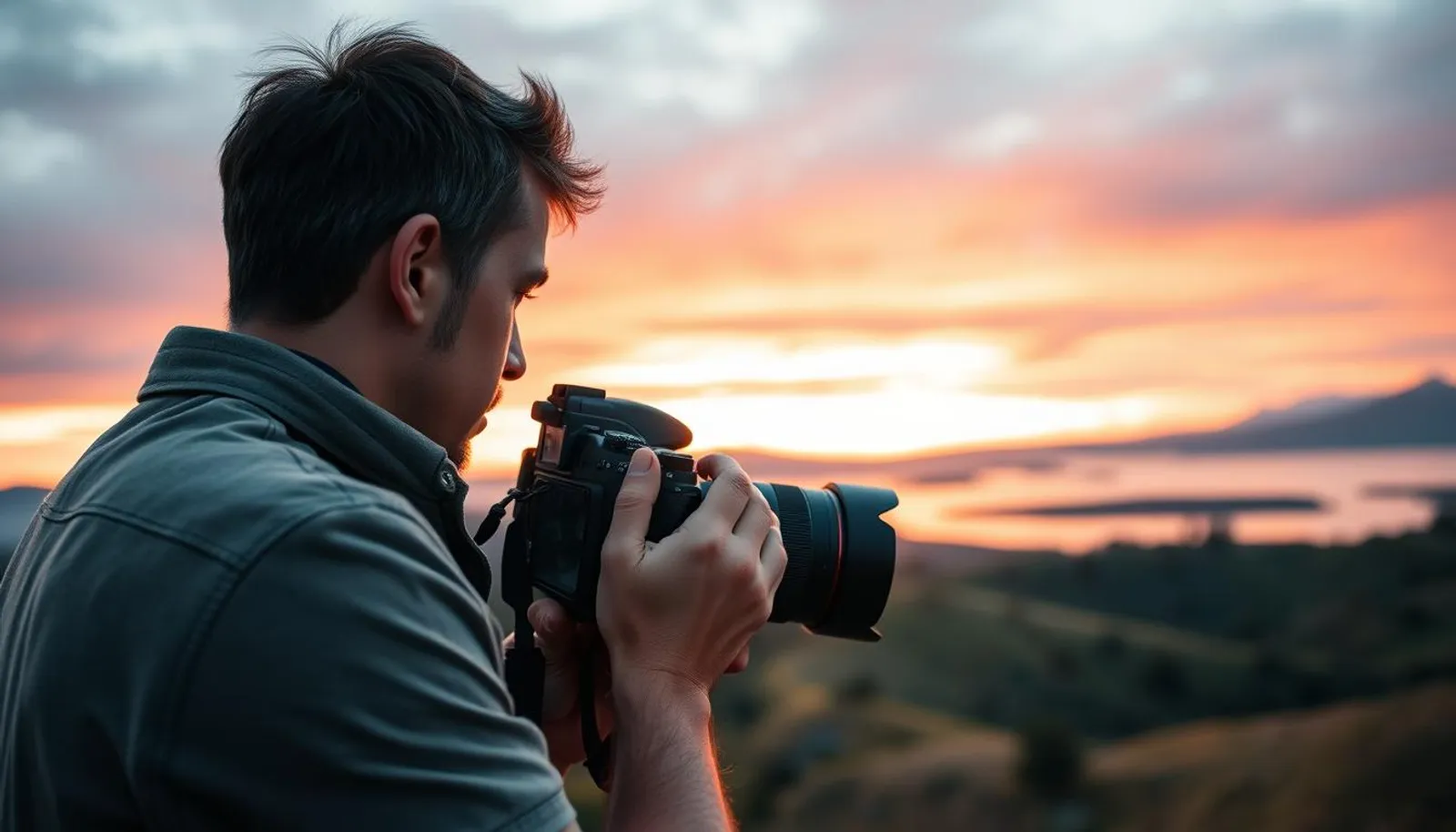

20 min read
Capturing stunning photos during your journeys can be a challenge, but with the right techniques, you can elevate your travel photography skills. A well-planned approach is essential to taking great photos, as it helps you prepare for various lighting conditions and compose visually appealing shots.
For those looking to improve their skills, a comprehensive travel photography guide can be invaluable. By understanding the best practices and techniques, you can take your photography to the next level.
Key Takeaways
- Understand the importance of preparation in travel photography.
- Learn to work with different lighting conditions.
- Apply composition techniques like the rule of thirds.
- Use the right gear to enhance your photography experience.
- Simplify and exaggerate your shots for maximum impact.
Understanding the Essentials of Travel Photography
Mastering travel photography involves more than just pointing a camera; it requires a blend of technical knowledge and artistic flair. To capture stunning images, one must first understand the core elements that define great travel photography.
Defining Your Photography Style and Goals
Before embarking on a photography journey, it’s crucial to define your style and what you aim to achieve. Are you more inclined towards a documentary or an artistic approach?
Documentary vs. Artistic Approaches
A documentary style focuses on capturing reality as it is, while an artistic approach allows for more creative freedom, often resulting in visually stunning images. For expert advice, consider studying the works of renowned travel photographers who have mastered these styles.
Setting Realistic Expectations
Understanding your equipment and its limitations is key. Setting realistic expectations based on your gear and the conditions you’ll be shooting in will help you prepare for the challenges ahead.
The Intersection of Travel and Photography
Travel photography is not just about taking pictures; it’s about experiencing a destination. Balancing the need to document your journey with the desire to truly experience it is crucial.
Balancing Experience and Documentation
Finding a balance between enjoying your travels and capturing them is essential. For travel photography tips, consider allocating specific times for photography and exploration.
Storytelling Through Images
Effective travel photography tells a story. By capturing a variety of scenes, from vibrant markets to serene landscapes, you can convey the essence of a place.
| Photography Style | Description | Tips |
|---|---|---|
| Documentary | Captures reality as it is | Pay attention to details, be unobtrusive |
| Artistic | Creative freedom, visually stunning | Experiment with angles, lighting |
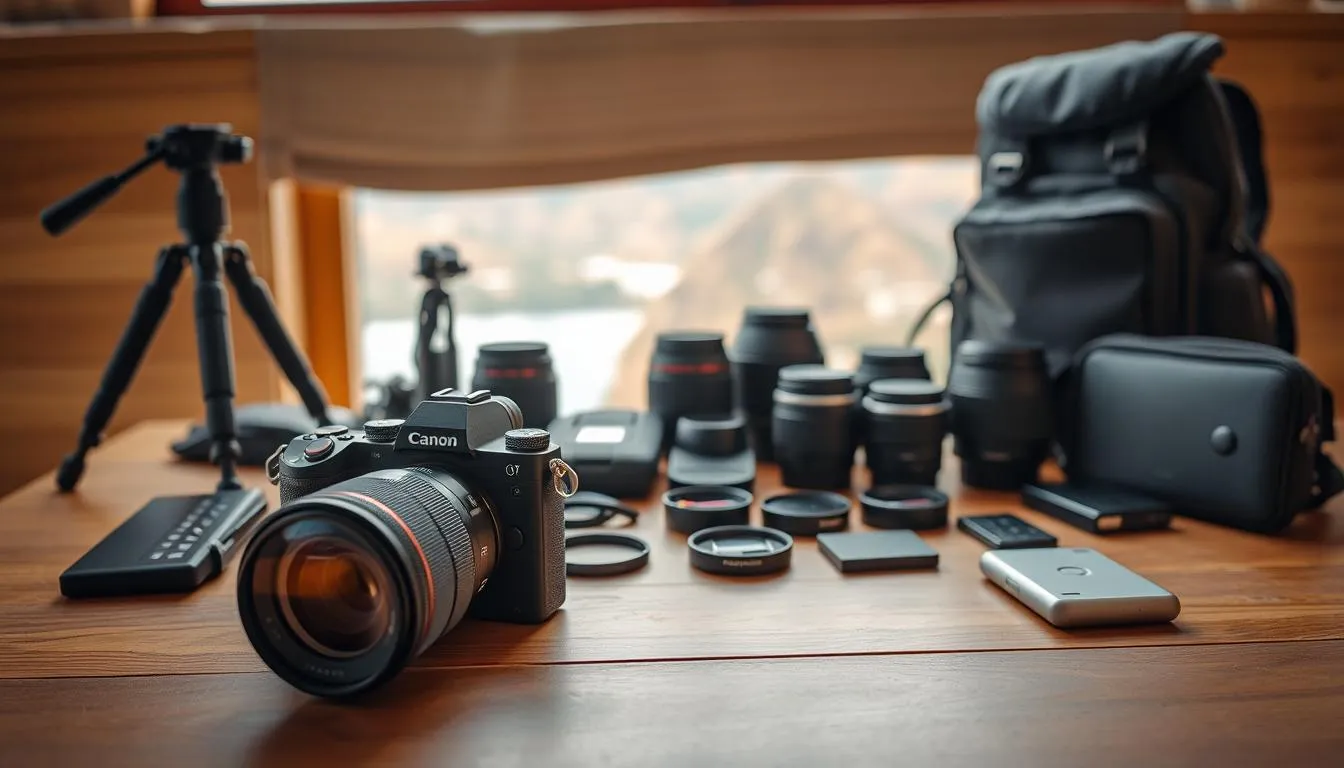
The key to successful travel photography lies in choosing the right gear that balances quality and portability. With the vast array of equipment available, selecting the essentials can be daunting. However, understanding the core components of your photography kit can make all the difference.
Camera Selection: DSLR vs. Mirrorless vs. Smartphone
Choosing the right camera is the first step in building your travel photography kit. DSLR, mirrorless, and smartphone cameras each have their advantages. DSLRs offer excellent battery life and optical viewfinders, while mirrorless cameras provide compactness and advanced autofocus features. Smartphones, on the other hand, offer convenience and high-quality sensors.
Weight Considerations for Travel
When traveling, the weight of your camera gear is a significant factor. Lighter equipment allows for more mobility and less fatigue. Consider the weight of your camera body and lenses when making your selection.
Weather Sealing and Durability Features
Travel photography often involves shooting in challenging weather conditions. Cameras with weather sealing and durability features can withstand these conditions, ensuring your gear remains functional.
Lens Recommendations for Different Travel Scenarios
The right lenses can significantly enhance your travel photography. For versatility, consider a travel zoom lens that covers a wide focal range. For specific situations, prime lenses can offer superior image quality and a unique perspective.
Versatile Travel Zoom Options
A versatile zoom lens, such as a 24-70mm or 24-105mm, is ideal for capturing a variety of scenes, from landscapes to portraits.
Prime Lenses for Specific Situations
Prime lenses, like a 50mm or 85mm, are excellent for portraits and low-light conditions, offering a shallow depth of field and superior image quality.
Must-Have Accessories and Storage Solutions
Beyond the camera and lenses, several accessories are crucial for travel photography. Tripods and stabilization tools help reduce camera shake, while memory cards and backup systems ensure you never lose your precious photos.
Tripods and Stabilization Tools
A sturdy tripod is essential for low-light photography and long exposures. Consider a compact, travel-friendly option.
Memory Cards and Backup Systems
Having enough memory cards and a reliable backup system, such as a portable hard drive, is crucial for storing and securing your photos.
Pre-Trip Planning and Research
The success of your travel photography adventure hinges on thorough pre-trip planning and research. As a travel photographer, having expert advice on locations, cultural norms, and optimal shooting times can make all the difference in capturing stunning images.
Researching Locations and Iconic Shots
Researching your destination is crucial for identifying iconic shots and understanding the best vantage points. Social media platforms like Instagram can be invaluable for location scouting, allowing you to see what other photographers have captured.
Using Social Media for Location Scouting
Utilize social media to explore potential shooting locations. Follow travel photographers and local guides to get insights into the best spots.
Apps and Resources for Photographers
There are numerous apps and resources available that can aid in planning, such as photography guides and weather forecasting tools. These can help you plan around optimal lighting conditions.
Understanding Cultural Sensitivities and Photography Etiquette
Understanding the cultural context of your destination is vital. This includes being aware of photography etiquette and respecting local customs.
Permission and Privacy Considerations
Always seek permission before photographing individuals, especially in sensitive or private settings. Be mindful of privacy and cultural restrictions.
Religious and Cultural Restrictions
Some locations may have restrictions on photography due to religious or cultural reasons. Researching these beforehand can prevent misunderstandings.
Creating a Shot List and Timeline
Creating a shot list and timeline helps ensure you make the most of your time. Plan around golden hour and other optimal lighting conditions.
Planning Around Optimal Lighting Conditions
Schedule your shoots during the golden hour for warm, soft light. Be prepared to adapt to changing light conditions.
Allowing Time for Spontaneous Opportunities
While having a plan is important, also leave room for spontaneous opportunities. Some of the best shots come from unexpected moments.
Mastering Technical Skills for Travel Photography
To capture breathtaking travel photos, mastering technical skills is crucial. The exposure triangle, comprising aperture, shutter speed, and ISO, forms the foundation of photography. Understanding how to adapt these settings for different environments is vital for capturing the essence of your travel experiences.
Exposure Triangle: Aperture, Shutter Speed, and ISO
Aperture controls the amount of light entering the lens, while shutter speed determines the duration of the exposure. ISO sensitivity affects the camera’s ability to capture images in various lighting conditions. For more information on the technical aspects of photography, visit United Nations of Photography.
Adapting Settings for Different Environments
Different environments require adjustments to the exposure triangle. For instance, low-light conditions may necessitate a wider aperture or slower shutter speed, while bright conditions may require a smaller aperture or faster shutter speed.
Exposure Compensation Techniques
Exposure compensation allows you to adjust the camera’s exposure settings to achieve the desired effect. This technique is particularly useful in high-contrast scenes where the camera’s metering system may struggle to capture the full dynamic range.
Focus Techniques for Different Scenarios
Focus techniques vary depending on the scenario. For travel photography, it’s essential to understand when to use manual focus versus autofocus.
Manual vs. Autofocus for Travel
Autofocus is convenient for capturing fast-paced scenes, while manual focus provides more control in low-light conditions or when using specific focus techniques like focus stacking.
Focus Stacking for Landscapes
Focus stacking involves capturing multiple images at different focus points and merging them to achieve a larger depth of field. This technique is particularly useful for landscape photography.
Understanding White Balance in Varied Environments
White balance adjusts the color temperature of your images to match the lighting conditions. Understanding how to use white balance creatively can enhance your travel photos.
Natural vs. Artificial Lighting Challenges
Natural light varies throughout the day, with golden hour and blue hour offering unique opportunities. Artificial lighting, such as streetlights or indoor lighting, presents different challenges that require adjustments to white balance.
Using White Balance Creatively
White balance can be used creatively to add mood or atmosphere to your images. For example, setting a warm white balance in a cool environment can create a cozy atmosphere.
Composition Techniques to Elevate Your Travel Photos
Composition is the backbone of great travel photography, and understanding its principles can significantly enhance your photos. Effective composition guides the viewer’s eye through the image, creating a more engaging and impactful visual experience.
Rule of Thirds and Leading Lines
The rule of thirds is a fundamental composition technique that involves dividing the image into thirds both horizontally and vertically, placing important elements along these lines or at their intersections. Leading lines are another powerful tool, drawing the viewer’s eye to the subject or through the scene.
Grid Overlay Techniques
Using a grid overlay on your camera or editing software can help you apply the rule of thirds more effectively. This visual guide enables you to balance elements within the frame, creating more harmonious compositions.
Finding Natural Leading Lines in Urban and Natural Settings
Leading lines can be found in various environments, from roads and paths to shorelines and mountain ridges. Identifying these lines and using them to lead the viewer’s eye to your subject can add depth and interest to your photos.
Framing and Perspective Techniques
Framing your subject within the environment can add context and depth to your photos. This can be achieved using natural frames like archways, trees, or rock formations.
Using Foreground Elements Effectively
Incorporating foreground elements can enhance the sense of depth in your images. Foreground interest can be achieved by including objects or features that lead the viewer’s eye into the scene.
Low and High Angle Perspectives
Experimenting with different angles can add variety to your compositions. Shooting from low or high angles can create more dynamic and interesting images, offering a fresh perspective on familiar scenes.
Creating Depth and Scale in Landscape Photography
Conveying the scale and depth of landscapes is a key challenge in travel photography. Techniques such as including human elements for scale and using layering can help achieve this.
Including Human Elements for Scale
Incorporating people or objects of known size into your landscape photos can provide a sense of scale, helping viewers appreciate the vastness or detail of the scene.
Layering Techniques for Visual Interest
Layering involves creating depth by including elements at different distances from the camera. This can be achieved through the use of foreground, mid-ground, and background elements, adding complexity and interest to your images.
By mastering these composition techniques, you can significantly elevate the quality of your travel photos, making them more engaging and memorable. As you practice, you’ll develop your own style and preferences, further enhancing your photography skills.
The Complete Travel Photography Guide: From Sunrise to Sunset
Capturing the essence of travel through photography requires a deep understanding of light, from the golden hues of sunrise to the soft glows of sunset. The varying light conditions throughout the day offer numerous opportunities to capture stunning images.
Golden Hour and Blue Hour Photography
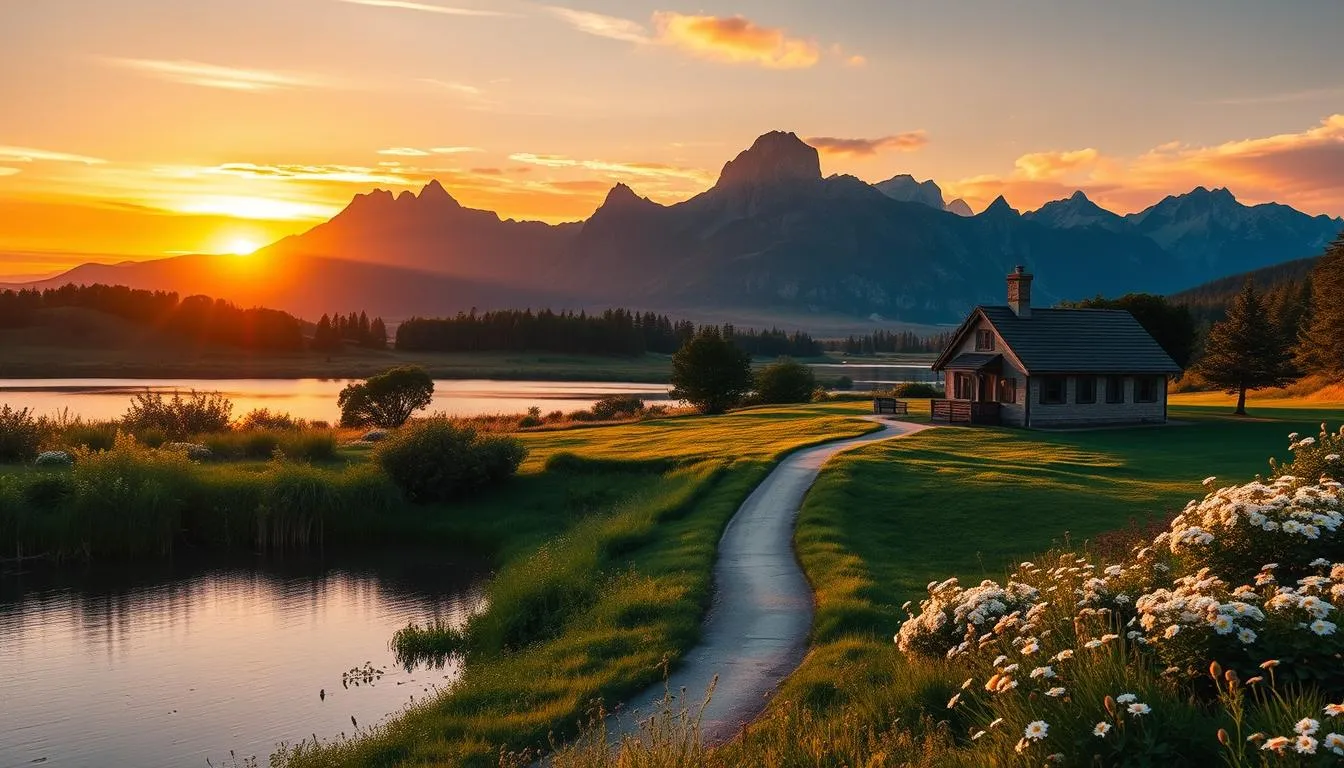
The golden hour, just before sunrise and after sunset, provides soft, warm light ideal for capturing landscapes and portraits. Planning for optimal light during this time can result in breathtaking photos.
Planning for Optimal Light
To make the most of the golden hour, plan your shoots in advance, considering the direction of the sun and the location’s topography. Use apps or websites to predict sunrise and sunset times.
Long Exposure Techniques
Long exposure during the golden hour can create beautiful effects, such as silky water or streaks of light. Use a tripod to stabilize your camera and experiment with different exposure times.
Midday Photography Challenges and Solutions
Midday light can be harsh, creating unflattering shadows and highlights. However, with the right techniques, you can still capture great photos.
Working with Harsh Light
Use diffusion filters or shoot in the shade to soften harsh light. Positioning your subject in a way that the light is not directly overhead can also improve your photos.
Finding Shade and Diffused Light
Look for shaded areas or overcast skies to capture images with soft, diffused light. This can be particularly effective for portraits and close-up shots.
Night Photography Techniques for Travelers
As the sun dips below the horizon, the night offers a new set of opportunities for capturing stunning travel photos.
Cityscapes and Light Trails
Use a tripod and long exposure to capture the vibrant lights of cityscapes and the trails of moving vehicles. Experiment with different angles and compositions.
Astrophotography Basics for Travelers
For those venturing into astrophotography, a sturdy tripod and a camera with manual settings are essential. Look for locations with minimal light pollution to capture the night sky in all its glory.
By understanding and adapting to the changing light conditions from sunrise to sunset and into the night, travelers can significantly enhance their photography skills and capture memorable images.
- Plan your shoots according to the golden hour and blue hour for optimal light.
- Use long exposure techniques to create artistic effects.
- Adapt to midday light challenges by using diffusion or finding shade.
- Explore night photography for cityscapes, light trails, and astrophotography.
Capturing Authentic Cultural Experiences
Travel photography is not just about taking pictures; it’s about capturing the authentic cultural experiences that define a destination. To achieve this, photographers must be willing to engage deeply with the local culture.
Street Photography Tips and Approaches
Street photography is a powerful way to capture the essence of a culture. It involves candid shots that tell a story about the daily lives of locals.
Candid vs. Posed Photography
There’s a debate between candid and posed photography. Candid photography captures unplanned moments, often resulting in more authentic images.
Being Discreet and Respectful
Being discreet is crucial in street photography. Photographers should respect people’s privacy and personal space, avoiding intrusive shots.
Photographing Local People with Respect
Photographing local people requires respect and understanding. It’s essential to approach subjects with sensitivity and an open mind.
Communication Across Language Barriers
Effective communication can be challenging when there’s a language barrier. Using gestures and simple language can help convey your intentions.
Fair Compensation Practices
If you’re photographing people, especially in exchange for money, it’s crucial to practice fair compensation. Understand the local norms regarding payment for photos.
Documenting Cultural Events and Traditions
Cultural events and traditions offer rich opportunities for photography. Researching the event beforehand can help you prepare for the best shots.
Research and Preparation
Understanding the cultural significance of an event can enhance your photography. Preparation involves knowing what to expect and when.
Telling Cultural Stories Authentically
The goal is to tell the story of the culture authentically. Avoid misrepresenting the culture or focusing on stereotypes.
Destination-Specific Photography Tips
Capturing the essence of a place requires adapting photography techniques to the environment. Whether you’re navigating the concrete jungles of urban centers or the untouched beauty of natural landscapes, understanding the unique characteristics of your destination is crucial for taking compelling travel photos.
Urban Travel Photography
Urban environments offer a plethora of photography opportunities, from towering skyscrapers to bustling street life. To capture the essence of cityscapes, consider the following techniques:
Architecture and Cityscape Techniques
When photographing urban architecture, look for interesting angles and perspectives. Shooting from low or high vantage points can add drama to your photos. Pay attention to lighting; the golden hour often provides soft, warm light that enhances the beauty of cityscapes.
Street Life and Urban Moments
Capturing street life requires a mix of preparation and spontaneity. Be aware of your surroundings and anticipate moments that tell a story. Blend in with the crowd to avoid drawing attention to yourself, allowing you to capture genuine, unposed moments.
| Technique | Description | Best Time |
|---|---|---|
| Architecture | Low or high vantage points | Golden Hour |
| Street Life | Anticipate moments | Anytime |
Nature and landscape photography demand a different set of skills and techniques. From the grandeur of national parks to the challenges posed by varying weather conditions, landscape photography is about capturing the beauty and majesty of the natural world.
National Parks and Wilderness Areas
When shooting in national parks or wilderness areas, be prepared for changing weather conditions and potentially challenging terrain. Use a tripod to stabilize your camera, especially in low light conditions.
Weather and Environmental Challenges
Weather can dramatically affect the outcome of your photos. Overcast skies can provide soft, diffused light, while clear skies offer opportunities for capturing dramatic sunrises and sunsets. Be prepared to adapt your shooting schedule to the weather.
“The camera is an instrument that teaches people how to see without a camera.” - Dorothea Lange
Coastal and Underwater Photography
Coastal and underwater photography offer unique challenges and rewards. Capturing the beauty of beach scenes and the vibrancy of underwater life requires specific techniques and equipment.
Beach and Ocean Scenes
When photographing beach and ocean scenes, pay attention to the lighting and composition. Use a polarizing filter to reduce glare and enhance the colors of the water and sky.
Basic Underwater Photography Tips
For underwater photography, a waterproof camera or housing is essential. Start by getting comfortable with your equipment underwater, then focus on capturing the vibrant colors and textures of marine life.
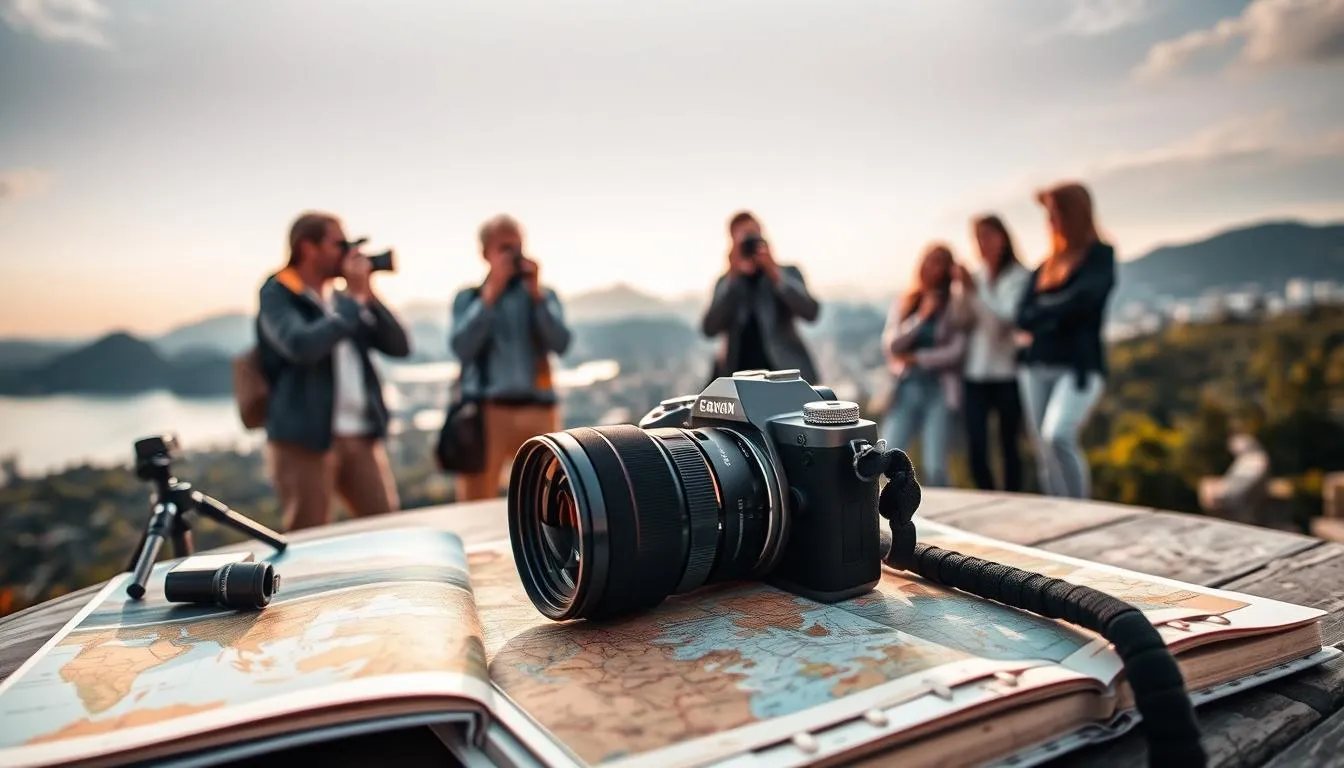 By adapting your photography techniques to the specific characteristics of your destination, you can capture the essence and beauty of the places you visit. Whether it’s the urban jungle or the natural world, each location offers unique opportunities for compelling travel photography.
Post-Processing Workflow for Travel Photographers
Post-processing is where the magic happens for travel photographers, allowing us to refine and perfect our captures. As we return from our travels, we’re often left with a treasure trove of images that require editing to truly shine.
Essential Editing Techniques for Travel Photos
Editing is a crucial step in enhancing the visual appeal of our travel photos. Two key techniques include:
- Color Correction and Enhancement: Adjusting the white balance and saturation levels to reflect the true colors of the scene.
- Removing Distractions and Tourists: Using tools like the clone stamp or healing brush to eliminate unwanted elements from the image.
For more detailed guidance on editing techniques, you can refer to expert resources like this guide on editing photography in.
Organizing and Managing Your Travel Photo Collection
With hundreds or thousands of photos to manage, organization is key. This involves:
- Metadata and Keywording Strategies: Adding relevant metadata and keywords to make your photos easily searchable.
- Backup Systems While Traveling: Ensuring that your photos are backed up regularly, using external hard drives or cloud storage services.
Creating Compelling Travel Photo Stories
A great travel photo story can transport viewers to new destinations. To achieve this, consider:
- Sequencing and Narrative Development: Ordering your photos to tell a story, whether it’s the progression of a day or the journey through a landscape.
- Platforms for Sharing Travel Photography: Utilizing social media, blogs, or photography websites to share your stories with the world.
By mastering these post-processing techniques and strategies, travel photographers can elevate their images, share their stories more effectively, and inspire others to explore the world.
Conclusion: Developing Your Unique Travel Photography Style
Mastering travel photography is a continuous process that involves refining your skills and style. By applying best practices and travel photography tips, you can capture the essence of your travels and tell compelling stories through your images.
To develop your unique style, focus on composition, storytelling, and editing. Experiment with different techniques, such as framing your subject, playing with light, and capturing cultural experiences. Consistency is key to establishing a recognizable style, so practice regularly and stay true to your vision.
As you continue to hone your craft, remember that travel photography is not just about capturing destinations; it’s about conveying emotions and experiences. By staying present, being respectful, and using a range of photo editing apps, you can elevate your photography and create lasting impressions.
FAQ
What are the best camera settings for travel photography?
The best camera settings for travel photography depend on the scene and lighting conditions. For general travel photography, a medium to wide aperture (f/5.6 to f/8) and a shutter speed of at least 1/125s is a good starting point. Adjust ISO according to the lighting, keeping it as low as possible to minimize noise.
How can I improve my composition in travel photography?
Improving composition in travel photography involves understanding and applying principles such as the rule of thirds, leading lines, and framing. Experiment with different angles and perspectives, and pay attention to the background and foreground elements to create visually appealing images.
What are some essential accessories for travel photographers?
Essential accessories for travel photographers include a sturdy tripod for stabilization, extra batteries and memory cards, a camera bag for protection, and a lens cleaning kit. Consider a portable backup solution, such as an external hard drive, to secure your images on the go.
How do I capture authentic cultural experiences through photography?
Capturing authentic cultural experiences involves being respectful and considerate. Take the time to understand local customs and traditions, and engage with the people you photograph. Consider the story behind the image and aim to tell it authentically through your photography.
What are some tips for photographing in different lighting conditions?
Photographing in different lighting conditions requires adaptability. For golden hour, use a lower ISO and wider aperture to capture warm tones. For harsh midday light, seek shade or use a polarizing filter to reduce glare. At night, use a tripod for long exposures to capture cityscapes or star trails.
How can I organize and manage my travel photo collection effectively?
Organizing and managing your travel photo collection involves using metadata and keywording strategies, backing up your images regularly, and creating a consistent naming convention. Consider using photo management software to streamline your workflow and make it easier to find specific images.
What are the best practices for editing travel photos?
Best practices for editing travel photos include starting with a consistent workflow, adjusting exposure and contrast, and enhancing colors naturally. Remove distractions and blemishes, but be cautious not to over-edit, preserving the authenticity of the image.
How can I share my travel photography effectively?
Sharing your travel photography effectively involves selecting a narrative or theme, sequencing your images to tell a story, and choosing the right platforms for your audience. Consider creating a blog, using social media, or participating in photography communities to showcase your work.