Zeus vs Poseidon: Comparing Two Mythical Destinations
According to Greek myth, Zeus and Poseidon were born to the Titans Cronus and Rhea. Cronus, fearing a prophecy that one of his children would overthrow him, swallowed each of his offspring as they were born. However, Rhea managed to save Zeus by giving Cronus a rock wrapped in cloth instead, whic...

18 min read
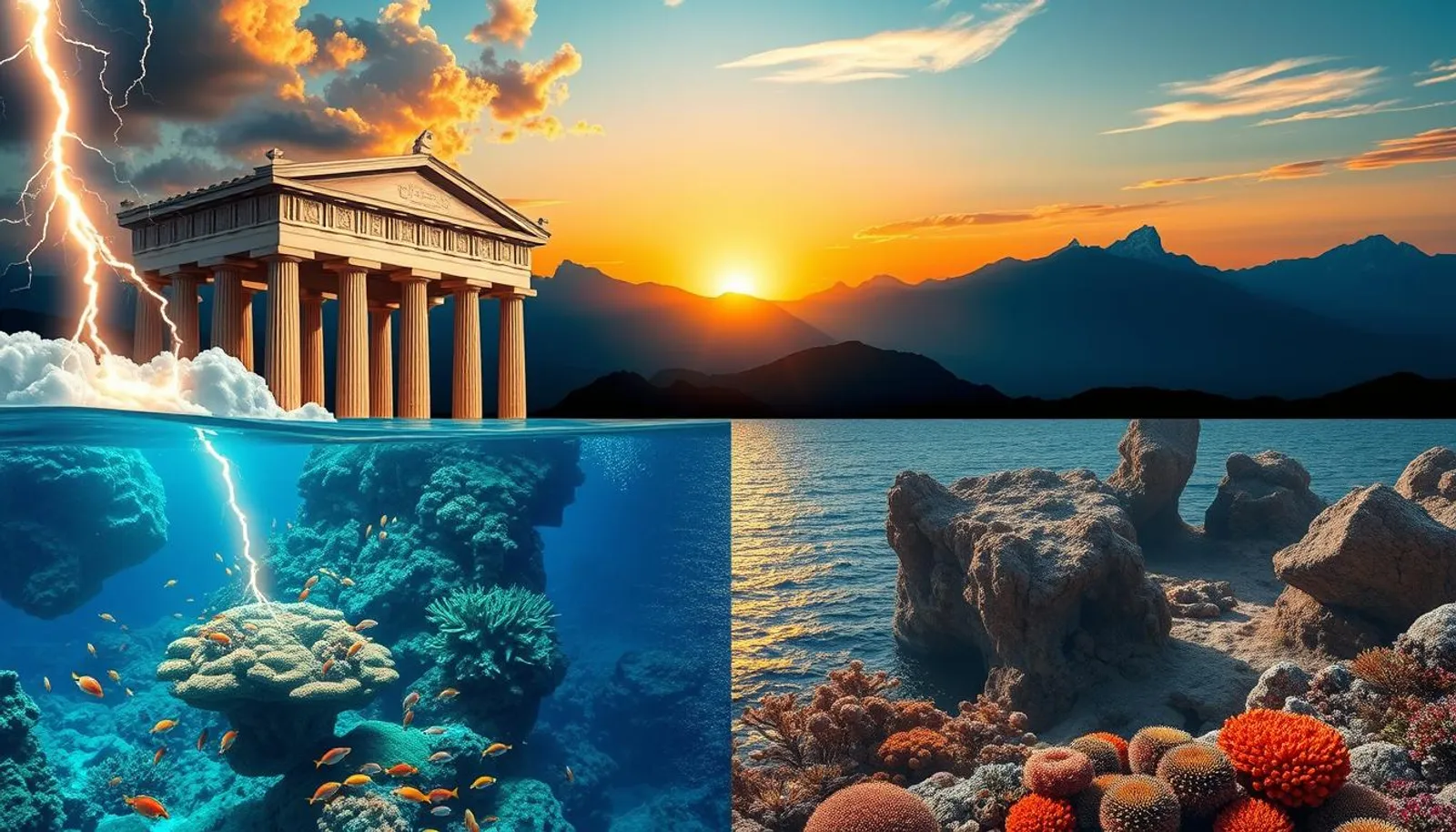
In the realm of Greek mythology, two powerful gods, Zeus and Poseidon, have captivated the imagination of people for centuries. Their mythical destinations, Mount Olympus and the sea, respectively, are steeped in legend and symbolism.
The stories surrounding these gods and their realms not only reflect the ancient Greeks’ understanding of the world but also continue to influence contemporary culture. For instance, the rivalry between Zeus and Poseidon for control of certain territories, such as the island of Aegina, highlights their significance in mythological narratives. To explore the similarities between Zeus and Poseidon is to gain a deeper understanding of their roles in Greek mythology.
Key Takeaways
- Zeus and Poseidon’s domains reflect different aspects of ancient Greek life.
- Their mythical destinations continue to influence contemporary culture.
- The rivalry between Zeus and Poseidon is a significant theme in Greek mythology.
- Both gods are associated with powerful symbols and weapons.
- Their stories offer insights into the ancient Greek worldview.
The Divine Brothers: Origins and Family Ties
Zeus and Poseidon, two of the most revered gods in Greek mythology, have origins steeped in legend. Their stories are a fascinating aspect of exploring Greek mythology, offering insights into the ancient Greek worldview and the roles these gods played in it.
Birth and Early Mythology
According to Greek myth, Zeus and Poseidon were born to the Titans Cronus and Rhea. Cronus, fearing a prophecy that one of his children would overthrow him, swallowed each of his offspring as they were born. However, Rhea managed to save Zeus by giving Cronus a rock wrapped in cloth instead, which he swallowed. Zeus was then raised in secrecy. Later, Zeus forced Cronus to cough up his siblings, including Poseidon. Together, they waged a ten-year battle against the Titans, known as the Titanomachy, which ended with their victory and the establishment of the Olympian gods.
Family Relationships in Greek Pantheon
The relationship between Zeus and Poseidon is complex and reflects the dynamics of power within the Greek pantheon. As brothers, they were allies in the Titanomachy, but their rivalry and differences in domain (sky vs sea) often led to tension. Zeus, as the supreme ruler of the skies and king of the gods, held significant power, while Poseidon, as the ruler of the sea, commanded great respect and fear. Their Zeus vs Poseidon comparison highlights not just their different realms but also their distinct personalities and roles in mythology.
Realms of Power: Sky vs Sea
Zeus and Poseidon’s powers were as different as the sky and the sea they commanded. This contrast was not just in their domains but also in their roles within Greek mythology.
Zeus’s Dominion Over the Heavens
Zeus, as the king of the gods, ruled over the heavens, controlling the weather and atmospheric phenomena. His power was symbolized by his control over the skies.
Weather Control and Atmospheric Phenomena
Zeus’s ability to control the weather made him a formidable figure, capable of summoning storms or clear skies as he willed. This power was often depicted in myths where his moods directly influenced the weather.
The Olympian Throne and Its Significance
The Olympian throne, Zeus’s seat of power, was a symbol of his authority over the other gods and mortals. It represented the pinnacle of divine power.
Poseidon’s Command of the Oceans
Poseidon, on the other hand, commanded the oceans, ruling over the tides and marine life. His domain was as vast and powerful as Zeus’s.
Tidal Forces and Marine Life
Poseidon’s control over the tides and his influence on marine life made him a crucial deity for maritime activities and the livelihoods of those dependent on the sea.
Earthquakes and Poseidon’s Earthshaker Title
Poseidon’s ability to cause earthquakes earned him the title “Earthshaker,” demonstrating his immense power and the fear he inspired among mortals and gods alike.
In comparing the realms of Zeus and Poseidon, it becomes clear that both brothers held significant powers that were crucial to the functioning of the world according to Greek mythology.
Mount Olympus: Zeus’s Celestial Abode
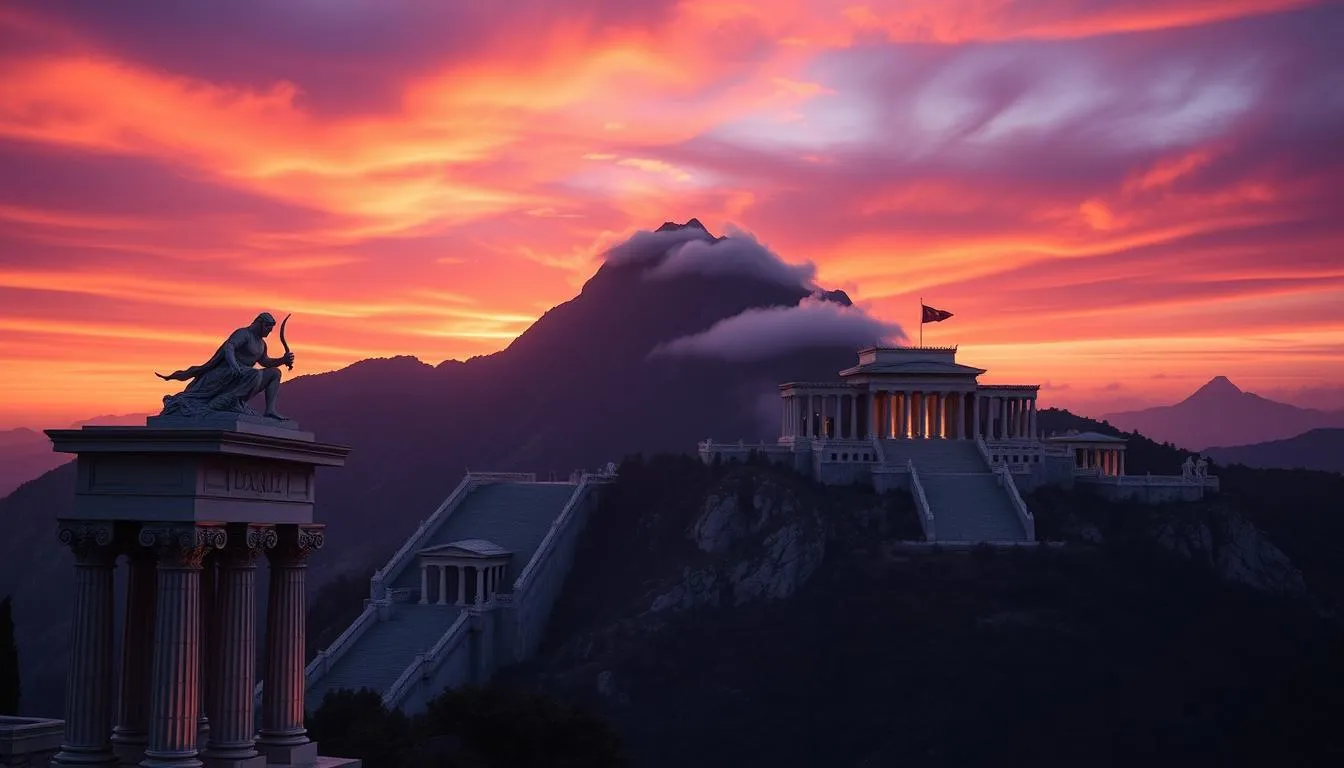
At the heart of Greek mythology lies Mount Olympus, the heavenly home of Zeus. This mythical abode is not just a residence but a symbol of power and divine authority. Exploring Greek mythology reveals that Mount Olympus is often described as a paradise for the gods, a place of eternal bliss and divine governance.
Architecture and Divine Layout
Mount Olympus is depicted as a magnificent palace, with grand gates and a majestic layout that reflects the supreme authority of Zeus. The architecture of Olympus is often associated with the divine craftsmanship of Hephaestus, the blacksmith of the gods. The palace is said to be surrounded by the homes of other gods and goddesses, creating a celestial community.
Divine Activities at Zeus’s Court
Zeus’s court on Mount Olympus is a hub of divine activity, where gods and goddesses gather to discuss the fates of mortals and immortals alike. It’s here that Zeus exercises his power, making crucial decisions that shape the course of history. For those interested in cultural exploration tips, understanding the dynamics of Zeus’s court offers insights into the ancient Greek worldview and their perception of divine intervention in human affairs.
“The gods, assembled on Olympus, debated the fate of Troy, with Zeus weighing the destinies of mortals and immortals.” - Homer, Iliad
| Divine Activity | Description |
|---|---|
| Councils of the Gods | Gatherings where gods discuss and decide on the fates of mortals and the course of divine plans. |
| Feasts and Celebrations | Grand festivities held in honor of significant events or deities, showcasing the joyous side of divine life. |
| Judgment and Decree | Zeus’s authoritative decisions that shape the destiny of gods, mortals, and the world. |
In the heart of the ocean, a golden palace shines, serving as the majestic abode of Poseidon. This underwater kingdom is a marvel of Greek mythology, showcasing the god’s dominion over the seas.
The Golden Palace Beneath the Waves
The palace is described as being made of coral and gold, with vast halls that echo the songs of mermaids. Poseidon’s throne room is said to be the centerpiece, where the god sits in judgment over the ocean’s creatures. The architecture is a blend of natural oceanic elements and divine craftsmanship, making it a unique mythical destination.
Life in Poseidon’s Oceanic Kingdom
Life beneath the waves is vibrant and diverse, with a multitude of sea creatures serving Poseidon. The kingdom is home to dolphins, horses, and other sacred animals associated with the god. The atmosphere is filled with the sounds of the ocean, from the gentle lapping of waves against the palace walls to the majestic calls of whales. This underwater world is a fascinating aspect of the Zeus vs Poseidon comparison, highlighting the distinct realms of the two brothers.
The comparison between Zeus’s Mount Olympus and Poseidon’s underwater palace offers insights into the different aspects of Greek mythology, showcasing the unique characteristics of each god’s domain.
Divine Symbols and Sacred Animals
Exploring the symbols and animals associated with Zeus and Poseidon offers a deeper understanding of their roles in Greek mythology. These symbols were not just mere representations; they were powerful icons that conveyed the gods’ abilities and domains.
Zeus’s Eagle, Lightning Bolt, and Oak Tree
Zeus, the king of the gods, was often associated with the eagle, symbolizing his power and authority over the skies. The lightning bolt, his most potent weapon, represented his control over the weather. Additionally, the oak tree was sacred to Zeus, signifying strength and longevity. For more information on Zeus, visit Mythopedia.
Poseidon’s Trident, Horses, and Dolphins
Poseidon, the god of the sea, was closely linked with the trident, a powerful symbol of his control over the oceans. The horse was also associated with Poseidon, representing his power and the untamed forces of nature. Furthermore, dolphins were considered sacred to Poseidon, highlighting his benevolent side and connection to marine life.
The symbols and animals associated with Zeus and Poseidon not only highlighted their divine powers but also played significant roles in Greek mythology and cultural practices. Understanding these symbols provides valuable cultural exploration tips and enriches our appreciation of ancient Greek culture.
Zeus vs Poseidon Comparison: Powers and Abilities
Zeus and Poseidon, the supreme rulers of the sky and sea, respectively, possess abilities that have captivated human imagination for centuries. Their powers not only reflect their divine status but also influence the natural world and mortal lives.
Weather Manipulation and Natural Disasters
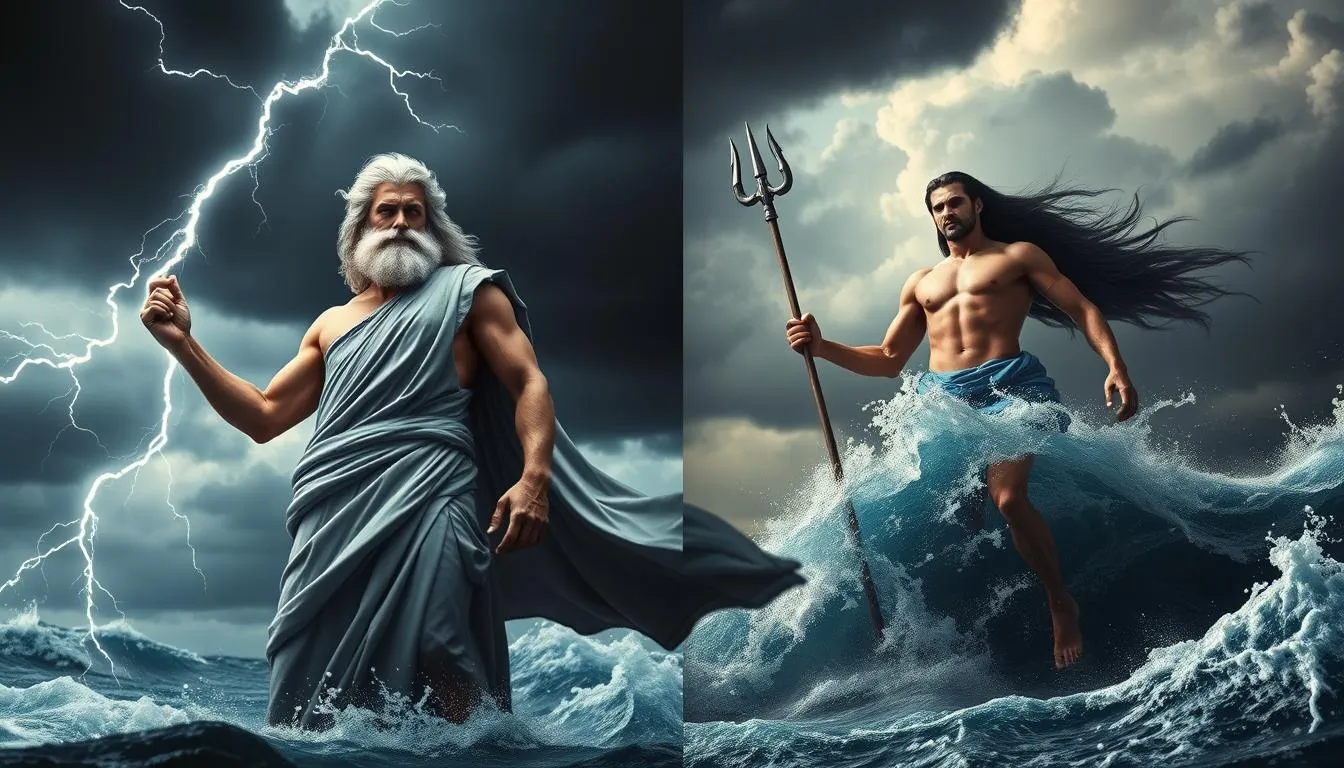
Zeus, as the god of the sky, wields control over the weather, summoning thunderbolts and orchestrating storms. His power is exemplified in the awe-inspiring displays of lightning that illuminate the sky. On the other hand, Poseidon, ruler of the sea, can trigger earthquakes and tsunamis with his trident, demonstrating his formidable influence over the ocean’s fury.
The brothers’ abilities to manipulate natural elements highlight their significant roles in Greek mythology. Zeus’s control over the weather is often associated with the cycles of nature and the fertility of the land, while Poseidon’s power over the seas and earthquakes underscores the unpredictable nature of the ocean.
Divine Influence Over Mortals
Both Zeus and Poseidon exert significant influence over mortals, though their methods and areas of impact differ. Zeus, with his dominion over the skies, often intervenes in mortal affairs through omens and weather events, guiding the course of human endeavors. Poseidon, meanwhile, affects mortals through his control of the seas, influencing maritime activities and the fate of those who venture onto the waters.
Their divine influence also extends to the realm of law and morality, with both gods being invoked in oaths and prayers. Zeus is often seen as the guardian of justice and the enforcer of oaths, while Poseidon’s power is sometimes called upon to protect seafarers and coastal communities.
Famous Myths and Legendary Battles
Zeus and Poseidon, two of the most powerful gods in Greek mythology, have been immortalized in various myths and legends that underscore their eternal rivalry. Their stories have captivated audiences for centuries, offering insights into the ancient Greek worldview and the complex relationships between the gods.
The Titanomachy: Brothers in Arms
During the Titanomachy, a monumental war between the Olympian gods and the Titans, Zeus and Poseidon fought side by side. They played crucial roles in securing victory for the Olympians, with Zeus wielding his powerful lightning bolts and Poseidon contributing his immense strength with the trident. Their collaboration during this period highlights the bond between the brothers before their rivalry became more pronounced.
The Contest for Athens
One of the most famous myths involving Zeus and Poseidon is the contest for the city of Athens. Poseidon, with his trident, created a spring of seawater, while Zeus’s daughter, Athena, presented an olive tree, symbolizing peace and prosperity. The people of Athens chose Athena’s gift, leading to the city being named after her. This myth showcases the indirect rivalry between Zeus and Poseidon, as their gifts were not directly compared but were pivotal in the city’s fate.
Notable Conflicts Between the Brothers
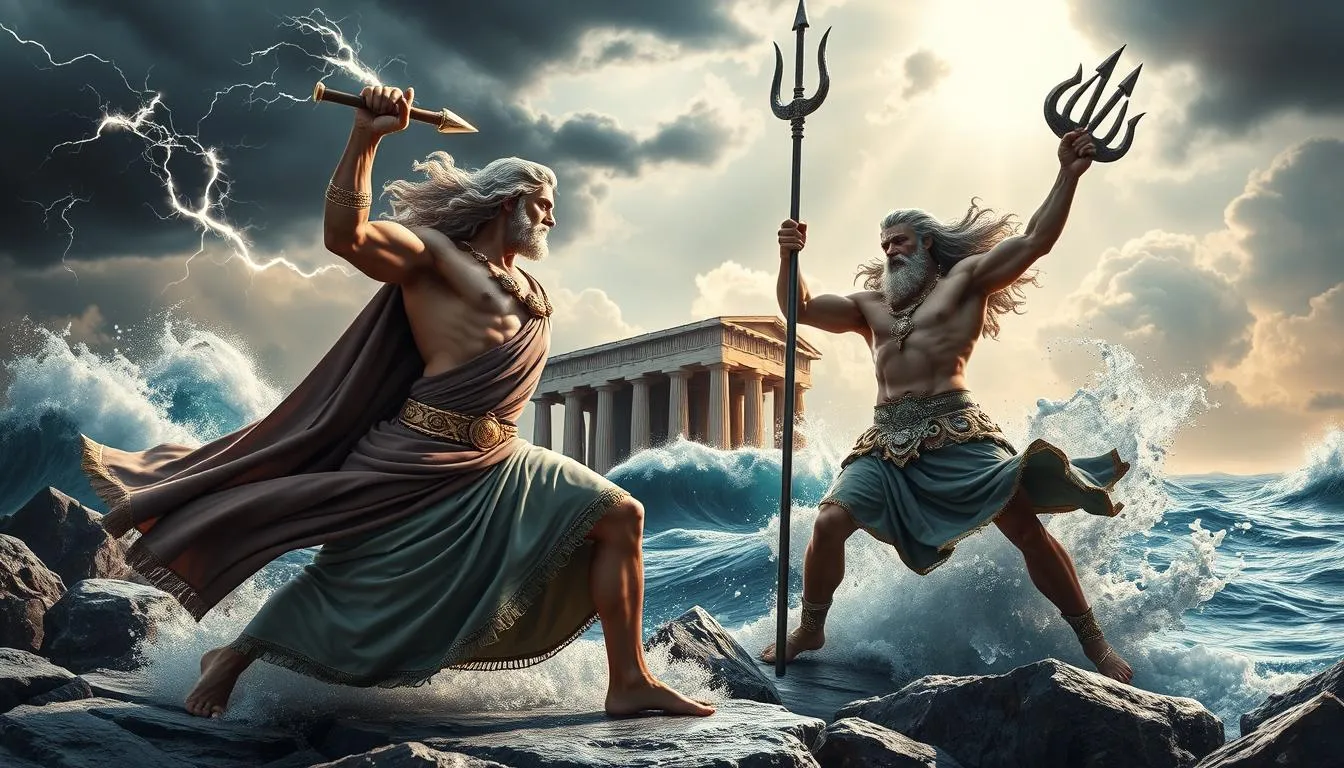
While Zeus and Poseidon are often depicted as allies, there are accounts of conflicts between them. For instance, Poseidon was known to have clashed with Zeus over various issues, including the fate of mortals and control over certain territories. These stories underscore the complex dynamics within the Greek pantheon and the multifaceted nature of the gods’ relationships. For more on Greek mythology and its gods, visit Heritage History.
Temples and Sacred Sites Worth Visiting
The temples and sacred sites honoring Zeus and Poseidon are testaments to the enduring legacy of Greek mythology. These ancient structures not only showcase the architectural prowess of the time but also provide insights into the religious and cultural practices of the ancient Greeks.
Magnificent Temples Dedicated to Zeus
Zeus, being the king of the gods, had numerous temples dedicated to him across Greece. These temples were often built in prominent locations, signifying his importance in Greek mythology.
The Temple of Zeus at Olympia
The Temple of Zeus at Olympia was one of the most famous temples dedicated to Zeus, known for housing the Statue of Zeus, one of the Seven Wonders of the Ancient World. Visitors can still explore the remains of this magnificent structure, gaining insight into the religious practices of the ancient Greeks.
Other Notable Zeus Sanctuaries
Other notable sanctuaries include the Zane sanctuary and various other sites where Zeus was worshipped. These locations provide a glimpse into the widespread reverence for Zeus across different regions of ancient Greece.
Breathtaking Sanctuaries of Poseidon
Poseidon, the god of the sea, also had numerous sanctuaries dedicated to him, often located near coastal areas. These sanctuaries highlight the importance of the sea in Greek culture and mythology.
The Temple of Poseidon at Sounion
The Temple of Poseidon at Sounion is a prominent example, perched on a cliff overlooking the Aegean Sea. This site is not only historically significant but also offers breathtaking views, making it a must-visit for those interested in mythology and natural beauty.
Coastal Shrines and Their Significance
Coastal shrines dedicated to Poseidon were crucial for the maritime culture of ancient Greece, serving as places of worship and offering protection for sailors. Exploring these sites provides valuable cultural exploration tips for understanding the interplay between mythology and daily life in ancient Greece.
Cultural Impact: How These Gods Shaped Ancient Society
The cultural footprint of Zeus and Poseidon in ancient Greece was extensive, influencing politics, social structures, and religious practices. Their impact can be seen in various aspects of ancient Greek life, from governance to daily religious rituals.
Political and Social Influence
Zeus and Poseidon played significant roles in shaping the political landscape of ancient Greece. Zeus, as the king of the gods, was often invoked to legitimize the rule of kings, while Poseidon’s association with the sea made him a crucial deity for maritime cities. Their influence extended to social structures as well, with myths about the gods often used to explain natural phenomena and social hierarchies.
Religious Practices and Festivals
The worship of Zeus and Poseidon was integral to ancient Greek religious life. The Olympic Games, held in honor of Zeus, were a significant religious festival that brought together Greeks from various city-states. Similarly, Poseidon’s festivals, such as the Poseidonia, were important in coastal cities, often involving rituals and competitions related to the sea.
Modern Travelers’ Guide to Mythological Sites
Embark on a journey through Greece’s mythological landscapes with our guide to Zeus and Poseidon’s sacred sites. This guide provides practical advice for travelers looking to explore the cultural and historical significance of these divine destinations.
Planning Your Zeus-Inspired Journey
When planning your visit to Zeus-related sites, consider the best times to explore mountainous regions. The spring and early autumn months offer mild weather, ideal for hiking and sightseeing.
Best Times to Visit Mountain Sites
The best times to visit mountain sites dedicated to Zeus are during spring (April-May) and early autumn (September-October), when the weather is pleasant and conducive to outdoor activities.
Cultural Exploration Tips for Inland Greece
When exploring inland Greece, immerse yourself in local culture by visiting traditional villages, trying local cuisine, and engaging with the community. This enriches your travel experience and provides a deeper understanding of the region’s heritage.
Following Poseidon’s Coastal Trail
Poseidon’s coastal trail offers a unique blend of mythology and natural beauty. Visitors can explore seaside archaeological wonders and enjoy the beaches along the way.
Seaside Archaeological Wonders
Some of the notable seaside archaeological sites include ancient ports and temples dedicated to Poseidon. These sites offer insights into the religious and cultural practices of ancient civilizations.
Combining Mythology with Beach Experiences
After exploring the archaeological sites, relax on the beautiful beaches of Greece. Many of these beaches are located near mythological sites, allowing you to combine relaxation with cultural exploration.
| Mythological Site | Location | Best Time to Visit |
|---|---|---|
| Mount Olympus (Zeus) | Inland Greece | Spring, Early Autumn |
| Isthmus of Corinth (Poseidon) | Coastal Greece | Year-round |
| Dodona (Zeus) | Epirus, Northwest Greece | Spring, Summer |
In today’s media landscape, Zeus and Poseidon remain compelling figures, symbolizing different aspects of power and authority. Their enduring appeal is evident in the numerous representations across various media platforms.
Hollywood’s Take on the Divine Brothers
Hollywood has frequently revisited the stories of Zeus and Poseidon, often depicting them in epic films and blockbuster franchises. For instance, Clash of the Titans (2010) and its sequel showcase the brothers’ rivalry and powers. These films typically emphasize the brothers’ domains: Zeus controls the skies, while Poseidon commands the seas. The visual effects and storytelling in these movies bring the mythological figures to life, captivating modern audiences.
Some notable examples of Zeus and Poseidon’s representation in Hollywood include:
- Immortals (2011), where Zeus is portrayed as a wise and powerful god.
- Percy Jackson film series, which draws heavily from Greek mythology, featuring both Zeus and Poseidon as significant characters.
Literary and Gaming Representations
Beyond Hollywood, Zeus and Poseidon have a significant presence in literature and video games. Authors often reinterpret their myths to fit contemporary narratives, exploring themes of power, family, and rivalry. For example, Rick Riordan’s Percy Jackson series reimagines the gods in a modern context, making them relatable to younger readers.
In video games, Zeus and Poseidon frequently appear as characters or references, influencing gameplay and storylines. Notable examples include:
- God of War series, where players encounter various Greek gods, including Zeus and Poseidon.
- Age of Mythology, a real-time strategy game that features Zeus and Poseidon as playable gods.
The diverse representations of Zeus and Poseidon in modern media underscore their lasting impact on popular culture, demonstrating the versatility and timeless appeal of Greek mythology.
Conclusion: The Enduring Legacy of Divine Rivalry
The comparison between Zeus and Poseidon offers a fascinating glimpse into Greek mythology, highlighting the distinct realms and powers of these two divine brothers. As we explored their origins, symbols, and mythological stories, it becomes clear that their legacy extends far beyond ancient tales.
When considering a Zeus vs Poseidon comparison, it’s evident that both gods have left an indelible mark on culture and history. Their stories continue to captivate audiences, inspiring mythical destinations comparison in travel and tourism. Exploring Greek mythology through the lens of these brothers provides valuable cultural exploration tips, enriching our understanding of the ancient world.
The relevance of Zeus and Poseidon in modern culture is undeniable, from Hollywood adaptations to literary works. Their divine rivalry continues to inspire artists, writers, and creators. As we reflect on their stories, we gain a deeper appreciation for the cultural heritage that shapes our world today.
By delving into the world of Zeus and Poseidon, we not only uncover the richness of Greek mythology but also discover the timeless appeal of these mythical figures. Whether through travel, literature, or art, exploring Greek mythology remains a rewarding experience, connecting us to a legacy that continues to inspire and captivate.
FAQ
What are the main differences between Zeus and Poseidon’s powers?
Zeus has control over the heavens and weather, while Poseidon commands the oceans and is associated with earthquakes.
What are some famous myths featuring Zeus and Poseidon?
The Titanomachy, the contest for Athens, and their roles in various legendary battles are some of the most famous myths featuring the divine brothers.
What are the symbolic meanings of Zeus’s eagle and Poseidon’s trident?
Zeus’s eagle represents his power and authority, while his lightning bolt symbolizes his control over the weather. Poseidon’s trident is a symbol of his power over the oceans and his ability to cause earthquakes.
How did Zeus and Poseidon influence ancient Greek society?
The divine brothers had significant influence on politics, social structures, and religious practices in ancient Greece, shaping the cultural landscape.
What are some must-visit temples and sacred sites dedicated to Zeus and Poseidon?
The Temple of Zeus at Olympia, the Temple of Poseidon at Sounion, and other coastal shrines are must-visit sites for those interested in exploring Greek mythology.
How are Zeus and Poseidon represented in modern media?
The divine brothers have been featured in various Hollywood films, literary works, and video games, often being reinterpreted in contemporary culture.
What are some tips for planning a trip to mythological sites associated with Zeus and Poseidon?
Visitors should consider the best times to visit mountain sites, cultural exploration tips for inland Greece, and combining mythology with beach experiences when planning their trip.
How can I explore the cultural heritage of Zeus and Poseidon’s mythical destinations?
By visiting temples, sacred sites, and participating in cultural events, travelers can gain a deeper understanding of the significance of Zeus and Poseidon in Greek mythology and their enduring legacy.